


Local government is broken. Municipal and county governments in the United States have been entrusted with great power when it comes to regulating the built environment. Zoning regimes, permitting processes, and building codes are almost universally handled at the local level. This system of hyper-local decision making has brought us to a place where housing costs are spiraling out of control, infrastructure can’t be maintained, and far too many of us have soul-crushing commutes through seemingly endless sprawl.
Reformers, especially in the YIMBY movement, have looked at local government’s pathological inability to make pro-prosperity policy and decided to call in state authorities. And while I agree that this is both necessary and legitimate, I also think it’s worth examining the root cause of local government dysfunction.
It’s all about the business model. How an organization makes money shapes every other decision it makes, and cities are no exception. Dependence on sales tax biases municipalities in favor of car dealerships and big-box stores. Reliance on state and federal grants means more of whatever specific thing the grants will pay for. Capping local property taxes makes new housing unattractive to cash-strapped city governments. What we need is a business model that reorients local government toward broad-based growth and shared prosperity, and that’s land value return.
Land value return funds local government from the value of land itself, through land value taxation (LVT), public land leasing, or both. Land is valuable because of everything a community builds around it. Collecting that wealth ties a city’s revenue to how much value the whole community creates, which gives local government, and the residents who direct it, a stake in getting things right.
Product Design is Downstream of the Business Model
Social media platforms make money by monetizing attention, so everything about them is engineered to increase engagement and maintain eyes on screens. That’s how we got infinite scroll, autoplay, and whatever black magic is going on with TikTok. All of that design is downstream of the business model. The design of cities can be understood in much the same way.

City governments will tend to allow or even encourage more of what helps them pay the bills. Twenty years after the passage of California’s Prop 13, a survey of administrators in 330 California cities asked them to rank the factors driving land-use decisions. Generating sales tax ranked first, and meeting affordable housing needs ranked near the bottom. For three-quarters of California cities with vacant land, no land use ranked higher than retail. Later research found a similar pattern in Florida, where higher local sales tax rates went along with more big-box and anchor store employment and less manufacturing, consistent with officials using zoning to chase sales tax.
As any good housing advocate will tell you, though, just zoning for something doesn’t make it happen if there’s no underlying demand. As it turns out, that’s also true for retail. The same literature that found that sales-tax-dependent cities chase retail also notes that local governments can’t create retail activity just by zoning for it. Cities within the same region end up competing for a limited number of revenue-generating stores, creating a race to the bottom in which local governments subsidize private businesses who are perfectly happy to shop jurisdictions for the best deal. When cities bargain with companies from a position of weakness, weird stuff happens. This is, after all, how we got things like the City of Lancaster, California, trying to eminent domain a 99 Cents Only Store so the real estate could be turned over to Costco.1
Of course, our story isn’t all about sales taxes. State and federal grants specify what they’ll pay for and how it has to be built. To qualify for most federal road aid, a street has to be classified as more than a local street and built to the design standards that come with that classification, standards historically written for moving traffic. This is at least part of the reason we have so many stroads.
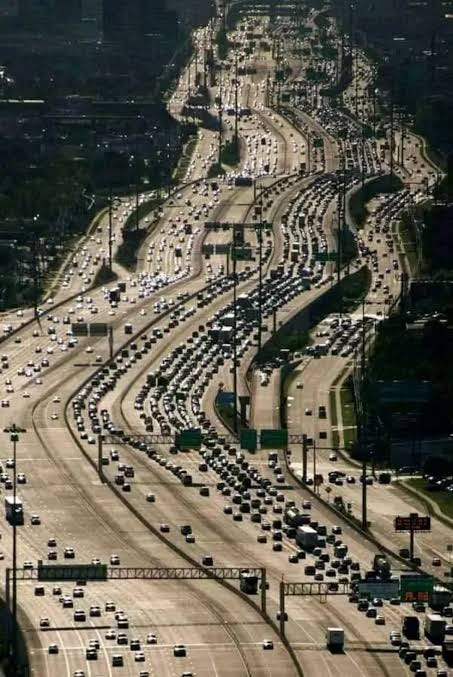
A city is shaped by its business model, and much of its success or failure is downstream from there. American cities need a better way of funding local government going forward. Let’s talk about that better way.
Land (Value) is a Big Deal
Economic growth shows up in land prices. More people in a single place producing more wealth drives up the price of land. This is why places with the most vibrant economies — San Francisco, New York, Seattle, Los Angeles — also have the most expensive land.
On top of general economic growth, public investment — roads, transit, parks, schools — contributes to land values as well. This is a bit like how a house party works; a party is only as good as the people who show up. The host can’t magically create a party packed with fun and interesting people by themselves, but they can facilitate it by providing the house (infrastructure), the drinks and food (amenities), and by making sure the bathrooms work (essential services).
Tortured metaphors aside, municipal governments create a lot of value which manifests as higher land values. This fact has implications for how cities ought to be funding the public purse.
When municipalities base their revenue model around collecting these land values (through some combination of land value taxation and public land leasing), they create a virtuous cycle wherein expenditure on infrastructure, services, and amenities begets higher land value, which produces greater revenue for investment in turn.

In part, this is a story about incentives. There’s an oft-repeated refrain in local government circles, especially in California, that housing doesn’t pay for itself.2 New homes mean new residents, and new residents need schools, parks, and so on. A car dealership or a big box store, on the other hand, needs comparatively little, yet provides a steady stream of sales tax revenue. It’s the same logic that leads cities to hand out tax abatements for sports stadiums on the questionable basis of capturing sales tax as some third-order effect.
Land value return changes everything. When a city’s revenue comes from the value of the land itself, it no longer matters as much what sits on top of it. The question stops being “does this project generate sales tax?” and becomes “what’s the most valuable thing this land could be used for?” To be clear, this doesn’t make cities pro-housing so much as it makes them non-prejudicial against it. A city collecting land value doesn’t care whether a parcel holds apartments, offices, or a corner store. It just wants the land put to its best use. But in a growing economy, that use is very often housing, and restrictive regulations (that suppress land values by limiting what land can be used for) leave money on the table.3
Land value return also enables local policymakers to clearly see the ROI of public investment; well-maintained parks, high-performing public schools, clean streets, and everything else that makes the city a nicer, more desirable place to live increase land values and thus the tax base. Amenities that look like cost centers today suddenly become wealth-generating public assets, not just in fact, but also in the minds of local policymakers.
Why Everything Feels Broken
American local government often works like a club with two rules: keep the membership exclusive, and make someone else pay the dues. If you’re one of the lucky ones on the inside, it’s a pretty good deal. But if you’re from the wrong class, the wrong racial category, or the wrong generation (roughly anyone under the age of 40), getting stuck outside on the sidewalk is pretty bad.
For most people, the exclusionary nature of local land use is quite obvious. In the early 20th century, local governments used zoning to keep racial minorities and members of the working class out of affluent neighborhoods — explicitly at first, and then, after the Supreme Court struck down racial zoning in 1917, through race-neutral methods that accomplished the same thing. This racial exclusion was eventually scaled up to the level of national policy as the federal government pursued a policy of easy credit for white (or at least not Black) homebuyers.4
This exclusion also entailed extraction. The people that our last century of land use policy left behind weren’t just denied a set of privileges, they were also forced to foot the bill for privileges other parts of society got to enjoy.5
At the same time as Black Americans were excluded from cheap credit for new homes, their existing communities were also literally bulldozed. Federal dollars paid for urban renewal and the interstates, but local redevelopment agencies chose which neighborhoods to clear, and state highway departments (often with plenty of local input) chose the routes. Unsurprisingly, all those highways just happened to run through Black neighborhoods like Tremé in New Orleans.
The communities that did persist in places like Harlem didn’t fare much better. By the 1960s, four-fifths of Harlem’s commercial and residential properties were owned by non-locals or companies, who collected the value that residents created.6 Hemmed into a handful of neighborhoods and shut out of the subsidized credit that might have let them buy land, many Black Americans in segregated neighborhoods entered the labor market on unequal footing and ended up selling their labor at a discount.
For as racially motivated as much of the story is, foisting the costs of local governance onto each other is a deeply American pastime in a much more general sense.
Daniel Wortel-London’s The Menace of Prosperity tells the story playing out in late 1800s New York City. As the city expanded from Manhattan into the outer boroughs, homeownership became more common. Many of the great political debates of the day were about whether improvements in a specific neighborhood — street lights, road paving, etc. — ought to be paid for via a city-wide levy or a neighborhood-specific tax. Naturally, newly minted homeowners in the emerging outer boroughs preferred the city-wide levy, since it meant Manhattan’s entire tax base would foot the bill for their new streetlights.
Returning to modern times, the more recent generations of homeowners have continued the national tradition of limiting how much of their land wealth can be taxed away.
The go-to example here is California’s Prop 13, which capped both assessments and rates, but that’s just an extreme case of a common phenomenon. Two years later, Massachusetts voters passed Proposition 2½, which limits how much a town’s total property tax revenue can grow each year. Neither was imposed from on high, mind you. Both were ballot initiatives, with homeowners leading the charge. Michigan, Oregon and Florida followed with their own caps on how fast a home’s taxable value can rise, and many other states have (or are now actively contemplating) similar restrictions on localities’ ability to tax local property.
Given all that, it’s small wonder local government feels broken. The fundamental issue is that the American system of local government was never really set up as a system for co-producing broad-based prosperity. It evolved instead as a battleground where individuals fought over how much local spending they could access, how much value they could extract from others, and how much of their own property values they could hold onto in the process. This system shifts costs onto the young and marginalized and siphons away wealth to the old and powerful.7
If we care about broadly shared prosperity that lets us engage in public life as something close to equals, the system was always broken. From the perspective of hoarding wealth and preserving privilege, well, one man’s bug is a member of the landed gentry’s feature.
How Land Value Return Makes Functional Local Democracy Possible
Land value return makes prosperity something we collectively share. It also enables honest public conversations about policy tradeoffs.
Under a land value return model, neighborhoods that don’t get public investment are naturally going to have lower land values and so will contribute a lower amount to the municipal budget. Ironically, in many cities across the country, we do the opposite — it’s the most marginalized communities that pay the highest effective tax rates. Collective prosperity requires sharing in all the wealth we create collectively, wealth that manifests in the value of the land itself.
Of course, even after ensuring one part of a community isn’t extracting wealth from another, we still need to be able to have hard conversations about tradeoffs so that we’re not mortgaging the prosperity of future generations. Consider a recent story out of Falls Church, Virginia. When the city needed to build a new high school, it gave residents two choices. They could either (a) increase everyone’s property taxes by $1,050 a year, or (b) use 10.3 acres of publicly owned land for redevelopment, monetize through land leasing, and only raise everyone’s property taxes by about $280. There was no room for pretending that new school + no new taxes + no new development was an option, and the voters got on board with allowing new development that would create the wealth that they’d then use to rebuild the local high school.
The YIMBY in me would prefer to just go full Japanese-style national land use rules and be done with it. However, the Falls Church conversation, where voters were given a real choice based on real material tradeoffs, is a good example of how healthy democratic decision making ought to work. And it’s the kind of conversation that land value return makes possible.

Before we close out, I want to make a few final points clear.
I’m not, in fact, looking at local democracy and saying “an LVT would fix that”. What I am saying, though, is that there are paths of least resistance within any political economy. Creating a path to materially prosperous and democratically inclusive local government requires land value return. Also, this is not a statement of political strategy. Though I’m presenting land value return as central to creating and maintaining more functional institutions, the order of operations for reform is a whole separate conversation for a different day. And finally, I don’t want to oversell the political-economy effects of current reform work. Passing a 4:1 split-rate LVT is not going to remake local democracy overnight (though it will certainly help a lot of other things in the short term).
The Road Ahead
I wrote this post with multiple audiences in mind. For land value return advocates, I want to make the case that our project is bigger than tax reform, and that the platform we’re building enables bigger-picture goals. For municipal reformers, I want to offer a deeper understanding of local-level dysfunction and a tangible set of mechanisms for building better local institutions.
And for everyone else, I’ll just say that we can build a better world, both for ourselves and for the people who will come after us. Part of that better world can, and should, include municipal governance that makes good policy the default and doesn’t require a knife fight in a phone booth to get anything done. Land value return won’t get us there on its own, but it’s a big part of what’s required.
Ultimately, if we want different outcomes, we need to recognize the game is already rigged, and re-rig it in favor of good choices instead of bad ones. Land value return is how we load the dice in favor of fiscally responsible local government with an incentive to build places people want to live.
Once upon a time (prior to 2012) California local governments were allowed to create their own institutional abominations known as Redevelopment Agencies (RDAs). In theory, RDAs were meant to empower local governments to pursue targeted redevelopment by declaring an area “blighted” (which self-granted the RDA eminent domain powers), undertaking public investment, and retaining whatever uplift said investments had on local property tax revenues. In practice, blight was defined so broadly it could mean anything. So local RDAs just went around drawing magic tax circles around “blighted” areas wherein — if the city could force an old use to turn over in favor of a new big box retailer — they’d not only get sales tax revenue, but also the incremental uplift when property sale and/or new construction prompted a Prop 13 reassessment.
Nolan Gray has pointed out that this intuition is often wrong. In California, selling a property resets its assessment to market value, and anything newly built on it is assessed at market value too, which usually means a substantial jump in property taxes. Mileage may vary, though, because most of that money isn’t the city’s to keep. Counties collect property taxes and then split them among cities, schools, the county itself, and special districts. This follows formulas the state set after Prop 13. So the refrain is less a law of nature than a symptom of the business model this essay is about.
The price of land and the cost of housing are related, but not the same. In fact, increasing land values are not necessarily inconsistent with decreasing housing costs. When an upzoning takes place, land values will sometimes increase (tldr if the regulations were the binding constraint, option values go up). When that same liberalization allows more homes per unit of land, however, the net effect can be lower cost housing on the whole. To put this in Bertaudian terms, we’re allowing people to reduce their per capita consumption of land (ie land got more expensive, but we let individual households just use a lot less of it).
Credit was an effective tool of exclusion because owning land required a large upfront purchase, so access to land ran through access to borrowing. If local governments had been aggressively reappropriating land value, the cost of accessing land would have shifted from higher upfront cost to lower annual payments.
Not all of this extraction ran through local government. Black homebuyers, for example, weren’t just relegated to more expensive uninsured mortgages; instead, they often had to resort to something called a land installment contract. These financial instruments looked and smelled like a mortgage, but allowed the lender to fully repossess the borrower’s property in the event of a single missed payment. If a family was late on their final payment — even after years of timely payments — they’d forfeit their property (incentivizing lenders to sometimes “lose” a check in the mail).
From Daniel Wortel-London’s The Menace of Prosperity: “Four-fifths of Harlem’s commercial and residential properties were owned by non-locals or companies by the 1960s. Four-fifths of the Harlem workforce was employed outside the community … This dependence reduced the economic function of Harlem and other “ghettos” to providing revenue and low-skilled labor on behalf of outsiders.” (pg. 183)
To be clear, I don’t think all homeowners are Disney movie villains. Obviously, homeowners sit on a highly illiquid asset, so taxing that wealth invites valid concerns about fixed-income senior homeowners. All of that, though, is not an argument against land value return; it’s an indictment of NIMBY housing restrictions and the institution of homeownership as the cornerstone of American wealth building.