

This past week marks a historic moment for the Center for Land Economics: it was, as an organization, our first ever YIMBYtown. For the uninitiated, YIMBYtown is the annual gathering of YIMBYs from across the country (and sometimes beyond); it’s where the leaders of the movement come together to learn from each other, debate the direction of the movement, and celebrate the year’s great triumphs. This year’s party took place in Raleigh, North Carolina and was a labor of love on the part of Jenn Truman and the team at City Builder.
Now, while this was the inaugural event for the CLE team as a whole, it was not my first rodeo. I’ve been lucky enough to attend three of the previous YIMBYtowns and would like to offer some perspective as a YIMBY and as a Georgist who has always considered those labels to be roughly the same thing.
YIMBYtown 2026 was one for the books. The conference was a blast in a thousand different ways, but what I’m most excited about is how much of a coming out party for land value taxation this year was.
The Center for Land Economics shared a table with the Progress and Poverty Institute and that presence plus the various talks that we collectively gave provided an abundance of exposure to folks working in the mainstream of housing reform.1 More than once I was told by — more than once — that land value taxation was the sexiest topic at the conference.2
Why did the Good News about land value hit so well? We carefully considered the way we showed up and how we communicated the message we wanted folks to hear.
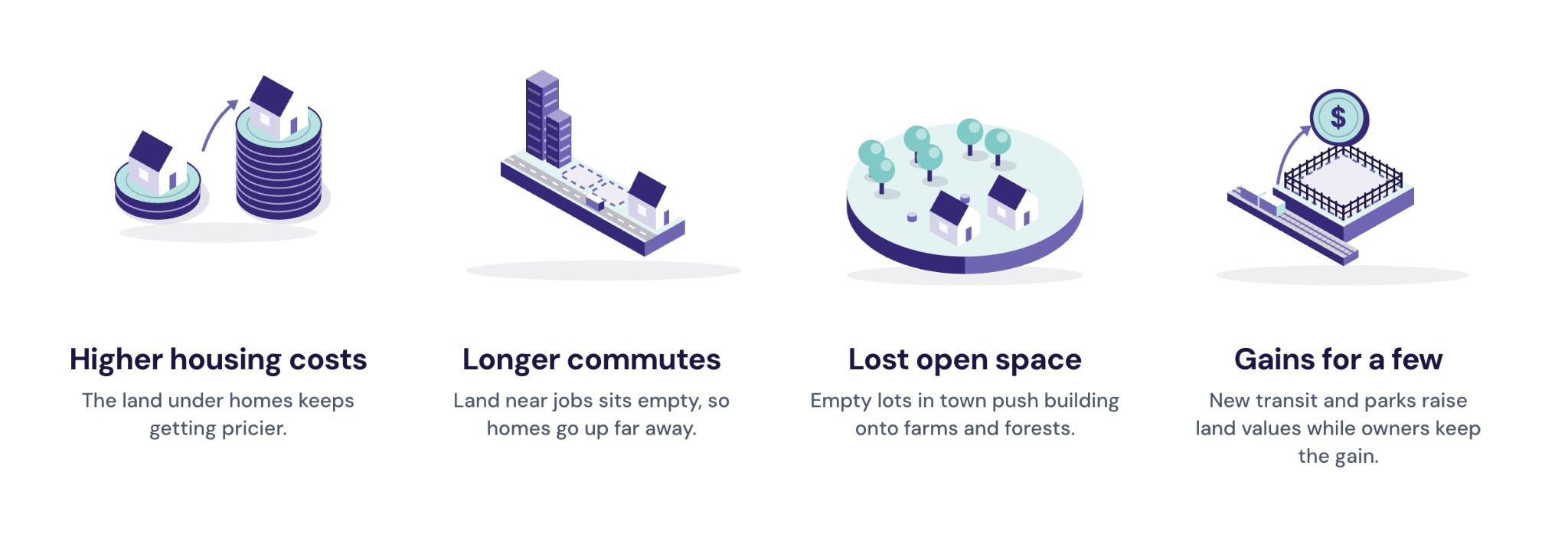
Increasingly, when we present land value tax as a concept to newcomers, we start with a pain point, then explain the problem, and only then describe the solution. Precious few people care about land value taxation or the concept of economic rents in a vacuum. What people — and this includes even policy wonks — care about are specific problems. How to fund transit, how to address vacant lots, how to pay for schools, how to achieve durable housing affordability.
Starting with the relevant pain point allows us to capture someone’s attention, walk through an explanation of the underlying economic problem, and lead them to the policy solution by giving them a tangible reason to care.
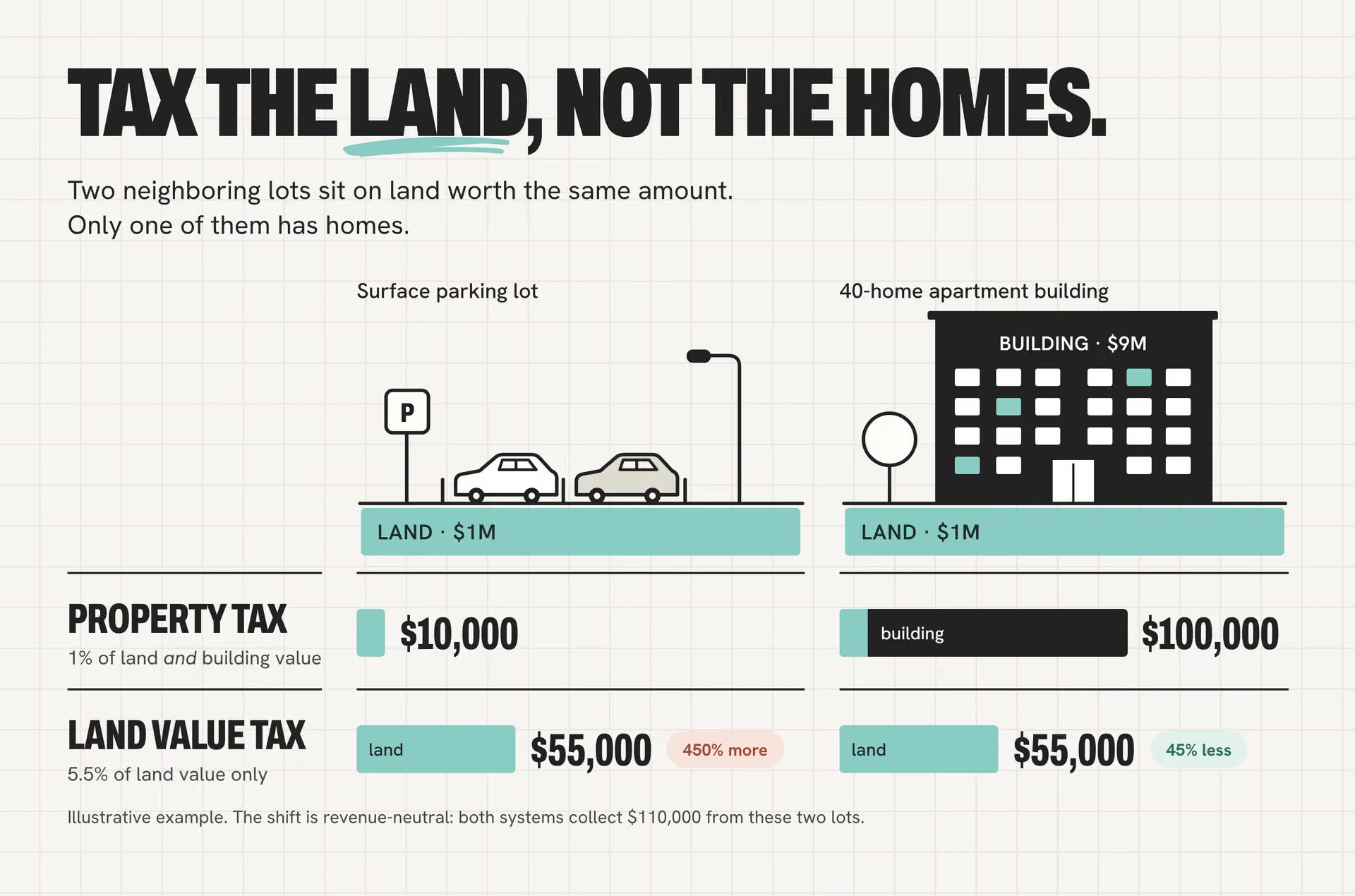
Beyond messaging though, CLE has focused on the scut work of creating implementable policy. Lars Doucet, President of Research and Development, has been hard at work creating easy to use open source tools for assessors to not only make their lives easier, but also make it easier for them to implement some version of land value taxation when the political time comes. Meanwhile, Greg Miller, our Executive Director and Fearless Leader, has been making connections and doing the legal, analytical, and policy homework for advocates and electeds across the country (Greg does a lot).3
Zooming out from the conference to the larger pro-housing movement as a whole, we’ve also been bridging the gap between policy idea and policy proposal. And the people who matter have taken notice. Nolan Gray, formerly of California YIMBY, now Chief Urban Planner at the Metropolitan Abundance Project, gave us a much appreciated shoutout the other week. More directly, Laura Foote, Executive Director of YIMBY Action, personally told me that she’s moved from LVT is a good policy idea we should do some day all the way to LVT is an actionable policy idea we should be working on right now, based largely on the progress CLE and YIMBY Action have made on tax policy in Virginia plus a better understanding of CLE’s advocacy approach.

Moving forward, land value taxation and related policies will be a core part of the YIMBY playbook. There’s growing recognition that they’re vital for long-term housing affordability and the financial sustainability of local government. That’s because a new generation of Georgist advocates are showing the wider YIMBY movement that land value taxation is not just a good idea, but politically actionable policy as well.
Today — Sunday, November 22, 2026 — is the 100th anniversary of Euclid v. Ambler, the Supreme Court case that provides the legal basis for the entire edifice of American zoning. During the closing keynote, Nolan gave an inspiring call to arms. He noted that a century of Euclid coincides with a decade of YIMBY and that with the momentum of the YIMBY movement, we’ll unshackle the next hundred years from the dead hand of the past.
For readers of this blog, I want to also add that the core Georgist insights that animate many of you are well received in YIMBY circles. And the core policy proposals that come from those insights are now on the menu as standard pro-housing fare as well. If this year’s YIMBYtown is any indication, the future of YIMBYism is bright and, by extension, the future of Georgist reform is, too.
Shoutout to Josie Faas, Russell Ritchie, and Stephen Hoskins of PPI + Greg for giving excellent talks. Additional props to Lars and Max Clark (Common Ground) for rounding out the crew manning the table.
In full transparency, I was told this exactly twice; but even with that admission, I think anyone saying land value taxation is the sexiest thing anywhere is an incredible achievement.
Additional shoutout to our intern Daniel Stein. He’s spent the last several weeks doing…honestly, a little bit of everything.
Great to hear that the YIMBY and Georgist movements are developing together. I’d like to see a fusion of the two alongside New Urbanism. We need more beautiful places!
Thanks for the update, Jeff! I’m eager to see what the LVT movement can do with the full support of the YIMBYs across the country. A new YIMBY adjacent group popped up in the small Arizona city where I live, so I’m sure I can get them to be fans of LVT using CLE’s playbook. Exciting times ahead!